EmployeeWorks
Give employees a single conversational entry point to search enterprise knowledge, request services, and take action across business systems.
Learn more about EmployeeWorksUnderstand how ServiceNow® AI Agents can help carry out tasks and progress workflows, and what organizations should consider when introducing them.
As a pure-play ServiceNow Elite Partner, The Cloud People can help you identify where AI agents could support your business, understand how they fit into your existing ServiceNow environment, and plan a practical approach to adoption, governance, and long-term value.
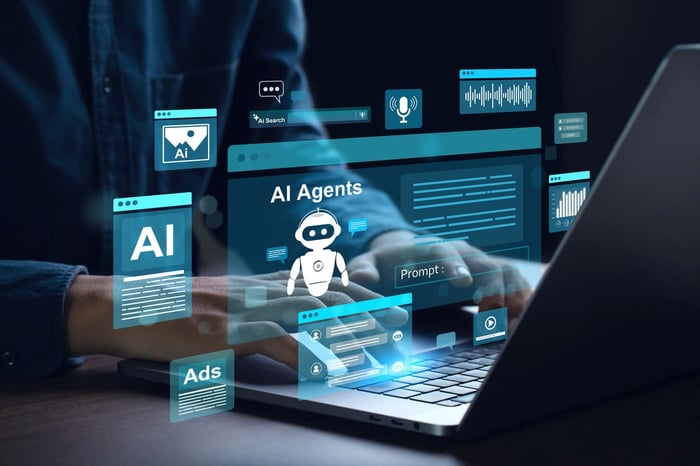
AI agents are AI-powered systems that can use information, tools, and defined objectives to take actions and complete tasks. Unlike systems that only provide an answer or recommendation, AI agents can carry out steps in a workflow, within the permissions and controls established for them.
ServiceNow® AI Agents are designed to work with ServiceNow data and workflows to support tasks across areas such as IT, customer service, and HR. They can be used individually or coordinated as part of a larger workflow, depending on the use case and configuration.
AI agents are given a role or objective and access to the tools and information needed to carry out their work. They can interpret a request, determine the steps needed, and use tools such as workflows, actions, and skills to complete those steps.
For more complex work, multiple agents can contribute to the same objective. ServiceNow’s AI Agent Orchestrator coordinates collaboration between agents, while AI Agent Studio is used to build and customize agents. These capabilities operate within the ServiceNow AI Platform and its existing data, workflows, and security controls.
The level of autonomy depends on the task and how the solution is configured. Some actions may run automatically, while others may require human review, approval, or intervention.
AI agents can be useful when a process involves clear goals, reliable information, and tasks that can be carried out within defined boundaries. Before introducing them, organizations should identify the work they want to improve and determine whether an agent is the right approach.
Important considerations include:
Use case and outcomes: What task or process should the agent support, and how will success be measured?
Data and access: Does the agent have access to the right information, and are permissions appropriate?
Controls and oversight: Which actions can it take independently, and when should a person review or approve them?
Workflow and integration: How does the agent fit with existing ServiceNow processes and connected systems?
Monitoring and improvement: How will performance, errors, and business value be assessed over time?
A well-defined use case and appropriate controls help organizations introduce AI agents in a way that supports their operating model and responsibilities.
As a pure-play ServiceNow Elite Partner, The Cloud People helps organizations understand how ServiceNow capabilities can support their business processes and wider platform strategy.
We can help assess potential use cases, review how AI agents would fit into your existing ServiceNow environment, and identify considerations around workflows, data, integrations, and oversight.
We can also help plan implementation and define how to evaluate the results. Our role is to help you make informed decisions about where AI agents can add value and how to introduce them responsibly. The Cloud People brings specialized ServiceNow expertise to planning, implementation, and ongoing improvement.
Learn more: Discover our solutions
Traditional automation typically follows predefined rules and steps. An AI agent can use context to determine which actions to take toward a goal, within its configured tools and controls. The right approach depends on the process: predictable tasks may suit rule-based automation, while more variable workflows may benefit from agentic capabilities.
ServiceNow Otto is an AI experience that helps people interact with ServiceNow and get work done. AI Agents carry out tasks and progress workflows toward defined objectives. They can work together: Otto can provide the user-facing experience, while agents perform actions behind the scenes, depending on the solution and configuration.
Not necessarily. The level of autonomy depends on the task, the agent’s permissions, and the controls in place. Organizations should define which actions can happen automatically and where human review or approval is required.
Give employees a single conversational entry point to search enterprise knowledge, request services, and take action across business systems.
Learn more about EmployeeWorks →Built on the ServiceNow platform, Flow is a conversational, AI-native service desk that helps teams provide employee support and automate repetitive requests.
Learn more on ServiceNow ⇗Help employees find information and get support through conversational AI that connects enterprise knowledge with business systems. Part of ServiceNow Otto.
Learn more on ServiceNow ⇗Give employees, customers, and support teams a unified AI experience that understands requests and helps get work completed across systems and workflows.
Learn more on ServiceNow ⇗Govern, monitor, and manage AI across your organization with visibility into AI assets, risks, usage, and performance.
Learn more about SI Control Tower →ServiceNow experts
ServiceNow AI projects
in the Nordics to implement ServiceNow AI
Interested in ServiceNow AI Agents? Talk to The Cloud People about your AI goals, existing ServiceNow environment, and potential use cases. We’ll help you identify practical next steps for your organization.