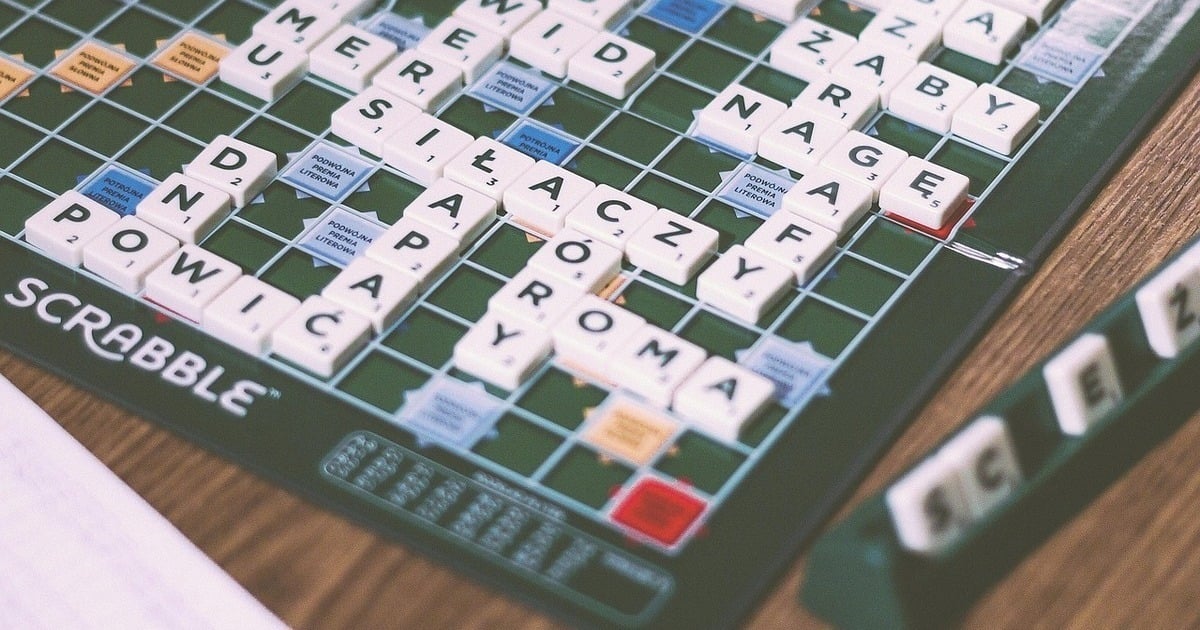
Why is a game of Scrabble good for your ServiceNow project?
What is Scrabble? Scrabble is a word building game. Up to four players draw seven letters and create words out of them. There is a dedicated...

Cezary Basta
•
4 min read
•
Sep 21, 2026
In my previous article, Why is a game of Scrabble good for your ServiceNow project?, I drew a parallel between the mechanics of an Agile development lifecycle and the strategy of a Scrabble match. I argued that just as players build upon existing letters to maximize score within rigid time constraints, development teams must treat every sprint story as a move on the board—building value atop the legacy of previous stories. The constraints were the rules, and the board was the platform.
The fundamental principles of the game remain steadfast, yet the underlying technology driving it forward has undergone a profound evolution. We have transitioned beyond the era of manual, purely hands-on "Agile Scrabble" into a new paradigm powered by sophisticated AI integrations—such as ServiceNow's Now Assist—which serve as the document's modern high-performance engine.
While core project management fundamentals stay firmly anchored in the established board game mechanics previously outlined, the overarching dynamic has fundamentally transformed. Practitioners are no longer limited to manually placing individual tiles; instead, the primary role is now orchestrating an intelligent AI system to analyze the board, evaluate possibilities, and identify optimal tile placements automatically. The ultimate objective remains building maximum value, but both the execution speed and the potential complexity of every single move have expanded exponentially.
Although it may sound as though human oversight is no longer required to compete or play effectively, this line of reasoning is fundamentally flawed. Artificial intelligence can only truly assist you if you possess the strategic foresight to ask the right questions and prompt it effectively. While an LLM or AI engine may thoroughly know the formal rules of the game, comprehend the entire vocabulary, and seamlessly calculate the optimal high-scoring word placement on any given turn, that mathematical maximum does not automatically translate into the best strategic move. You must constantly evaluate the broader context: Is the overall board state more advantageous or perilous for you after this play? What crucial tiles remain on your rack or hidden in the bag? Are you currently leading or trailing in points? Does it serve your strategy to open up high-scoring lanes for your opponent, or is it wiser to keep the board defensive and closed?
Ultimately, pure calculation completely overlooks the core human element—the subtle psychological intuition, emotional intelligence, and reading of your opponent that exists entirely above the physical board. Even the most mathematically optimal move calculated by AI can be anticipated and brutally countered by a seasoned player. However, when you combine algorithmic insights with human instinct—managing your resources, reading the room, and playing your tiles with true intention—you unlock the ability to consistently outmaneuver and defeat significantly higher-ranked opponents.
The Polish language is notoriously complex, characterized by intricate morphological inflection, seven grammatical cases, and a rigorous internal logic. This structure forces speakers—and especially Scrabble players—to maintain extreme spatial and grammatical awareness. Every tile placement in Polish Scrabble demands an intimate understanding of how root morphemes shift across case endings, prefixes, and contexts, creating a high level of word-level semantic density.
However, this human linguistic density faces a technical bottleneck in artificial intelligence. Standard Large Language Model (LLM) subword tokenizers (such as Byte Pair Encoding) are predominantly optimized for English. In morphologically rich languages like Polish, tokenizers frequently fragment inflected words across arbitrary sub-character boundaries rather than natural morphemes. Research shows this creates a severe "token tax" or token fertility penalty: Polish text requires up to twice as many computational tokens as English to express the exact same semantic concept, unnecessarily inflating context windows and processing costs.
This structural penalty is precisely why Polish Scrabble serves as an ideal cognitive training ground for AI engineering. Because Polish native speakers naturally operate with high semantic precision, and Scrabble players are trained to optimize value within rigid spatial constraints, they are uniquely conditioned to minimize token waste. When configuring ServiceNow Now Assist skills, this dual training enables practitioners to engineer concise, structurally unambiguous prompts. By stripping away redundant verbiage while retaining core intent, they actively counter the model's architectural token tax—ensuring Now Assist skills operate with maximum efficiency and precision.
To succeed in this new AI-driven era, we have to map our old board game strategy to the new machine-learning framework:
To truly master the board, you must recognize that modern AI skills act as your high-scoring modifiers:
Effective AI integration is not merely about dumping raw data into a prompt and hoping for a coherent response. It demands deliberate strategic placement, domain-specific vocabulary, and an acute awareness of the platform constraints. Whether you are guiding an Agile sprint or engineering prompts for ServiceNow models, the foundational philosophy remains identical: master the rules, carefully curate your context, and maximize the impact of every single interaction. The parameters are established, the engine is ready, and the board is yours to play.
What is Scrabble? Scrabble is a word building game. Up to four players draw seven letters and create words out of them. There is a dedicated...
In today's data-driven world, protecting employee privacy is no longer an option but a necessity. Organizations face a growing landscape of privacy...
ServiceNow introduced integration capabilities with Microsoft Teams, allowing, e.g., the Virtual Agent to be used directly in Teams. This feature is...