EU AI Act Readiness for ServiceNow users

EU AI Act Readiness for ServiceNow users
7:36

Your AI is already moving into the workflow. Is your governance keeping up?

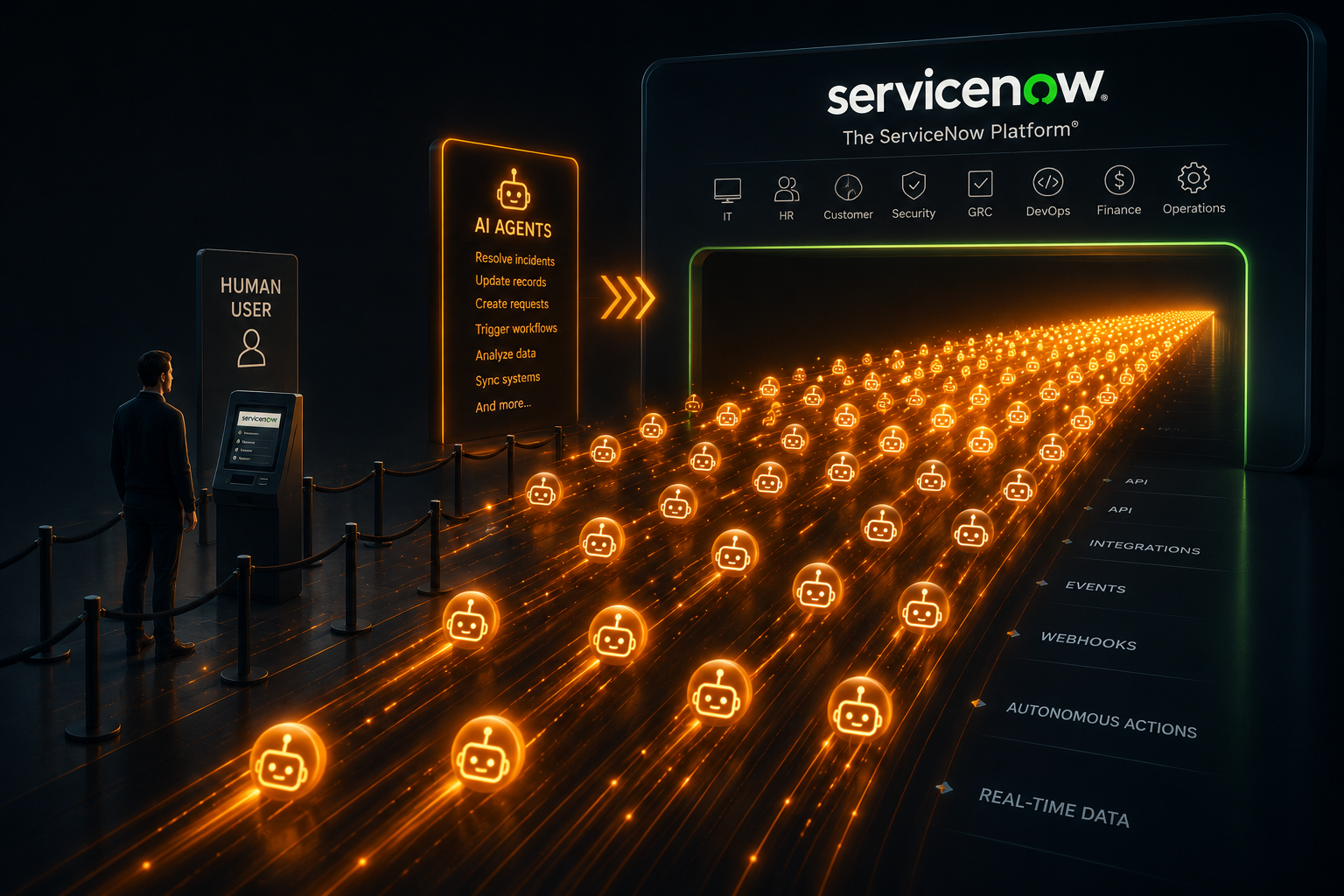
AI is quickly becoming part of how work gets done. In ServiceNow, it can summarise incidents, draft responses, route cases, support agents, recommend next steps and, increasingly, take action inside workflows.

That is powerful. It is also uncomfortable.

Because the moment AI moves from suggestion to action, the questions change. It is no longer enough to ask whether AI can improve productivity. Platform Owners also need to ask: Who owns this AI asset? What data does it use? What is it allowed to do? What happens if it is wrong? And can we prove that the right controls were in place?

The EU AI Act makes these questions more urgent. While the regulation is being phased in over several years, 2 August 2026 is the key general application date for many of its central obligations. But the date is not the only reason to care. The bigger shift is that AI is becoming operational. It is moving closer to employees, customers, security processes and business-critical decisions.

For ServiceNow customers, AI governance cannot sit in a document on the side. It needs to be built into the platform where the work actually happens.

The risk is not AI adoption. The risk is unmanaged AI adoption.

Most organisations are not starting from zero. AI may already be present in virtual agents, predictive models, generative AI features, Now Assist capabilities, third-party tools, custom applications or integrations connected to ServiceNow workflows.

That creates a visibility problem. Many teams know they are using AI, but fewer have a complete overview of where it is used, which processes it supports and what level of risk it introduces.

This is where the discomfort starts for Platform Owners. ServiceNow is often the operational backbone of the enterprise. It connects people, processes, data, approvals, incidents, requests, cases, assets and services. When AI becomes part of that environment, governance is no longer an abstract compliance topic. It becomes a platform responsibility.

A suggested response in a service desk process may be low risk if a human reviews it before sending. An AI agent that updates a record, changes a priority, triggers a remediation workflow or influences an employee or customer outcome requires a different level of control.

Without clear governance, organisations risk scaling AI faster than they can explain it, monitor it or trust it.

ServiceNow users are now part of the AI governance conversation

AI governance is often owned by legal, compliance, security and risk teams. Their involvement is essential. But someone also needs to translate governance into the way work is actually configured and controlled.

That is where ServiceNow users, Platform Owners and process owners become critical.

Platform Owners understand how workflows operate across the organisation. They know which processes are business-critical, which data is involved, which integrations matter and where automation already exists. This makes them well positioned to help the organisation move from AI policy to AI practice.

The Platform Owner does not need to become a legal expert on the EU AI Act. But they should help the organisation answer five practical questions:

  • Where are we using AI today?

  • Who owns each AI-enabled asset?

  • What level of risk does it represent?

  • What is the AI allowed to recommend or execute?

  • How do we monitor it and prove that the right controls are in place?

These questions are simple. The hard part is answering them consistently across the enterprise.

What good governance looks like in practice

The first step is visibility. Organisations need an inventory of AI assets across ServiceNow and connected tools. This should include what the AI does, which workflow it supports, what data it relies on, who uses it and whether it only recommends or can also take action.

The second step is ownership. Every AI-enabled use case should have a business owner, a technical owner and a risk owner. Without this, AI decisions become difficult to approve, change, monitor or retire.

The third step is risk classification. Not every AI assets should be treated the same. A generated internal summary is different from an AI-supported decision that affects access, prioritisation, customer communication, security response or employee services. A simple low, medium and high risk model is often enough to start, as long as the classification leads to different controls.

The fourth step is setting boundaries for AI agents. Organisations should be clear about what AI can read, what it can update, which actions require human approval and when the AI must stop and escalate to a person. A useful principle is to separate recommendation from execution. AI can often assist safely by drafting, summarising or suggesting. Allowing AI to execute actions requires more deliberate governance.

The final step is traceability. When AI is used in a workflow, the organisation should be able to see where it was used, what output it produced, whether a human reviewed it and what action was taken afterwards. This is not only about proving compliance. It is also about improving AI over time.

Where ServiceNow AI Control Tower fits in

This is where ServiceNow AI Control Tower becomes relevant.

AI Control Tower is designed to help organisations gain a unified view of AI investments, assess AI risk, monitor compliance and maintain audit-ready governance across the AI lifecycle. For ServiceNow customers, that matters because AI governance should not be managed separately from the workflows, assets and business services where AI is being used.

Instead of treating AI governance as another manual reporting exercise, Platform Owners can use AI Control Tower as a more practical control point: a way to create visibility, connect AI assets to business context, monitor risk and support a more structured governance process.

It does not remove the need for ownership, policy or good decision-making. But it can give organisations a better place to start. And for many ServiceNow customers, starting with visibility and control is exactly what is needed.

One action to take now

If you are a ServiceNow Platform Owner, start by asking one question:

Can we see all the AI assets that are already active or planned across our ServiceNow environment — and do we know who owns them?

If the answer is no, that is the place to begin.

Create visibility. Clarify ownership. Classify risk. Define what AI is allowed to do. Make monitoring part of the workflow.

With 2 August 2026 approaching as a key EU AI Act milestone, this is the right time to act. But regulation is not the only reason. Responsible AI governance is what allows organisations to scale AI with confidence.

Ready to turn AI governance into platform governance?

The Cloud People helps organisations strengthen ServiceNow as a foundation for enterprise workflows, automation and AI adoption. We can help you assess where AI is already being used, define a practical governance model and explore how ServiceNow AI Control Tower can support visibility, risk management and control.

If AI is becoming part of how your organisation works, governance needs to become part of the platform.

Talk to The Cloud People about preparing your ServiceNow platform for responsible, scalable AI.

Need help to get started?

Fill out the form and we will contact you.

Related blog posts

Who owns the outcome when AI gets it wrong?

1 min read

Who owns the outcome when AI gets it wrong?

In 12 months, a regulator will ask you to trace that AI decision. That is not a forecast. That conversation is already happening — in compliance...

The AI shift platform owners can’t afford to ignore in 2026

The AI shift platform owners can’t afford to ignore in 2026

If you’ve been anywhere near a ServiceNow release note, keynote, or LinkedIn feed lately, one thing is undeniable: AI is no longer “coming.” It’s...

Being part of NTT DATA: More reach - same commitment

Being part of NTT DATA: More reach - same commitment

When companies announce acquisitions or investments, the conversation often focuses on the future: new ambitions, long-term roadmaps, and big...