
ServiceNow Approved: Combine ITSM and ITOM and work more efficiently
With Service Operations, we are merging the ITSM and ITOM workflows and fostering comprehensive infrastructure management, synchronizing workflows...
 Odd M. Leonhardsen
•
5 min read
•
Odd M. Leonhardsen
•
5 min read
•
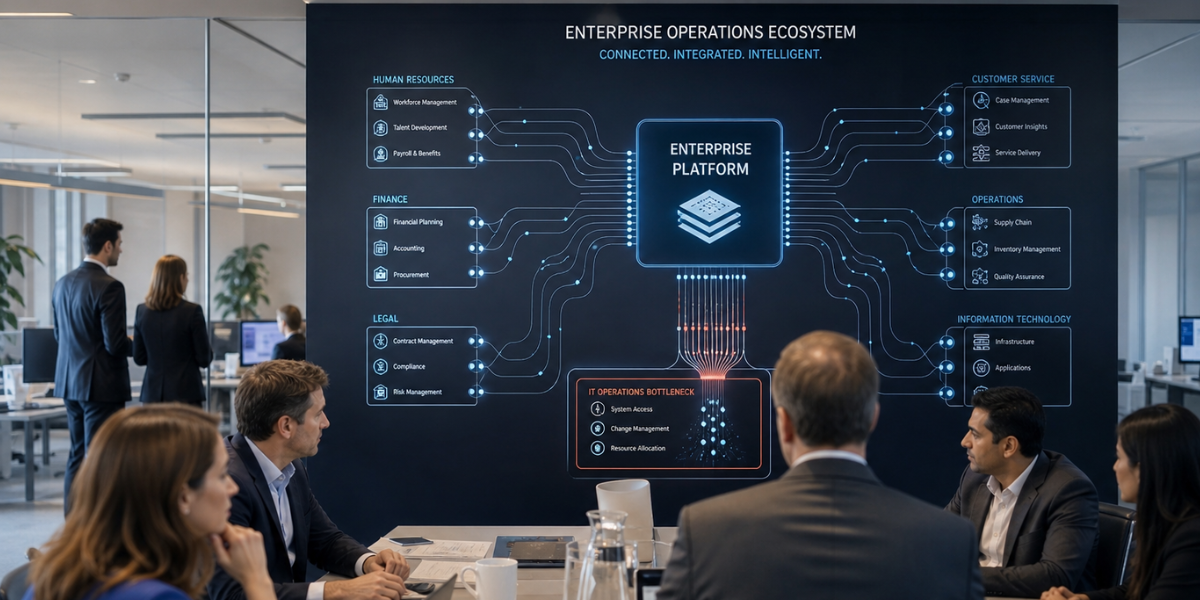
ServiceNow has quietly become the AI platform for enterprise transformation. Most organizations still run it as a ticketing tool under IT Operations, and the value that mismatch leaves on the table should worry every leadership team.

For the past decade I have watched ServiceNow grow up, from the inside. I was part of opening ServiceNow's first office in Norway back in 2014-2015; today I am VP Solutions at The Cloud People, a Pure Play ServiceNow partner. That vantage point means I sit across the table from organizations of every size and industry, and I keep seeing the same gap.
Back then, very few companies had seriously considered running critical enterprise workflows in the cloud. We spent far more time on security, data residency, cloud maturity, and operational stability than on business transformation. In practice, ServiceNow was an ITSM and ITOM platform: incident, change, the CMDB, monitoring, operational process.
Given that scope, placing the ServiceNow Platform Owner under IT Operations wasn't just reasonable, it was the right call. The platform has since changed beyond recognition. Most organizations I meet have not changed with it.
01 – The real shift
This is the part many leadership teams have not yet fully absorbed. ServiceNow is no longer "the ticketing system," and it is no longer merely a workflow engine. With AI Control Tower, Agent Orchestrator, enterprise AI agents, Knowledge Graph, and Workflow Data Fabric, it has become one of the very few places in the enterprise where AI, data, and workflow actually converge, the connective tissue for orchestrating agentic AI across the entire organization.
That is a fundamentally different proposition. The platform now spans risk and compliance, CRM and customer service, field service, HR, facilities, finance, legal, procurement, and core business services, and increasingly governs how AI agents act on work across all of them. In many enterprises it has become one of the broadest automation and AI-orchestration platforms in the business.
“ServiceNow is no longer where you log a ticket. It is increasingly where the enterprise decides how AI does the work.”
02 – The problem
And yet, in most of the organizations I work with, the platform owner still reports into IT Operations. That is a structural mismatch, and it is no longer harmless. It quietly shapes what gets prioritized, who gets a say, and how much of the platform's value the organization ever sees.
03 – Recurring patterns
Across countless engagements, the same four patterns repeat, and each one quietly leaks value.
Sales wants CRM. Customer service wants CSM. Operations wants field service management. Facilities needs service delivery. Legal needs contract management. The factory floor needs OT management. HR wants workflow automation. The list keeps growing, but every one of these initiatives is judged through an IT Operations lens, so adoption outside IT stalls. Budget compounds the problem: when the platform sits under IT Operations, its funding is set and defended for operational outcomes: stability, upgrades, technical debt, not business automation or AI. Cross-functional initiatives end up competing for money that was earmarked for something else entirely, and lose almost by default. It isn't bad intent; it's the predictable consequence of where the budget sits. The technology can support it, the organization around it won't, and the capability ends up licensed but largely unused.
Investment conversations shrink to upgrade cycles, CMDB health, technical debt, discovery coverage, and instance performance. All necessary, none of them executive-level. Meanwhile the board is asking how to automate work, deploy AI safely, and lift productivity. An over-operationalized ServiceNow organization slowly loses the strategic seat it should own.
Investment conversations shrink to upgrade cycles, CMDB health, technical debt, discovery coverage, and instance performance. All necessary, none of them executive-level. Meanwhile the board is asking how to automate work, deploy AI safely, and lift productivity. An over-operationalized ServiceNow organization slowly loses the strategic seat it should own.
The governance challenge becomes even more significant as AI adoption accelerates, a topic I explored further in The AI You've Bought May Be Illegal to Deploy.
Success gets measured in incident reduction, SLA performance, uptime, and ticket deflection. Useful, but incomplete. A mature ServiceNow organization should also be measured on automation value delivered, productivity gained, employee and customer experience, AI adoption, and time-to-value. What you measure is what you fund, and operational metrics quietly cap the platform's ambition.
04 – The value at stake
Here is what I would want every executive team to sit with. The technology is no longer the constraint. ServiceNow can already automate the work, orchestrate the agents, and connect IT and business workflows end to end. The constraint is the operating model around it, and that constraint is entirely self-imposed.
Every quarter the model lags behind the platform, value leaks in ways that rarely show up cleanly on a dashboard: automation that is paid for but never rolled out beyond IT, AI initiatives duplicated across silos, productivity gains deferred, and a widening gap between what the platform can do and what the organization permits it to do. Competitors who treat ServiceNow as an AI and transformation platform compound that advantage year after year. Organizations who keep it boxed inside IT compound the loss.
"The platform is ready. In most organizations the operating model is the bottleneck, and it is costing more than the dashboards reveal."
05 – The direction
There is no single perfect answer, but the direction is far clearer than it was five years ago. The most mature organizations treat ServiceNow as an enterprise platform, a workflow platform, a transformation platform, and, increasingly, their AI-orchestration platform. In practice, ownership moves closer to the CIO office, enterprise platforms, digital transformation, or a strategic business- technology organization. Not purely IT Operations.
The setup I find most effective usually looks like this:
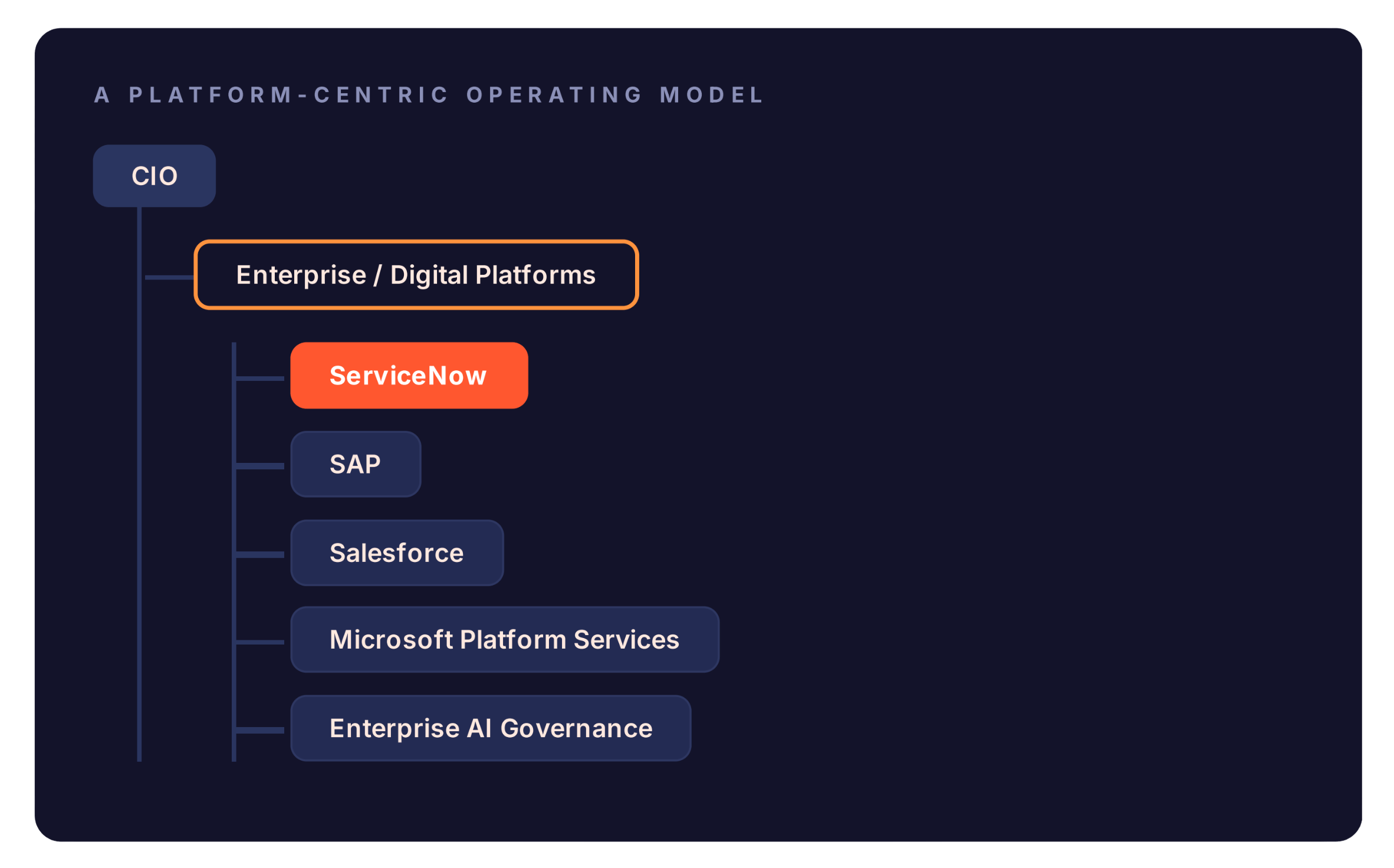
In this model, the ServiceNow Platform Owner becomes a strategic platform leader with a mandate that spans business and AI, not an operational administrator waiting for the next upgrade window.
06 – The shift
The challenge isn't technical. It's organizational. Most companies implemented ServiceNow when ITSM was the focus, IT owned the workflows, and AI wasn't part of the conversation. The platform then outgrew the operating model, and AI has turned that quiet gap into an urgent one, because it forces questions that are no longer IT Operations questions:
Any organization that cannot answer these clearly already has a problem. It simply may not have shown up in the numbers yet.
07 – Final reflection
IT Operations should absolutely keep a central role, operational stability, the CMDB, platform engineering, security, discovery, and technical governance. None of that goes away, and none of it should. But IT Operations should no longer exclusively own the platform's direction. ServiceNow has become too strategic, and far too central to enterprise AI, for that.
The organizations that win with ServiceNow over the next few years won't be the ones with the best instance health. They will be the ones who recognized, early, that they were no longer managing an IT tool, but governing an AI platform for enterprise transformation, and who built the operating model to match.
Access the full brief as PDF by clicking here:
 THE PERSPECTIVE SERIES
This is a part of an ongoing series from The Cloud People on ServiceNow, enterprise platforms, and AI-driven transformation. More to follow.

With Service Operations, we are merging the ITSM and ITOM workflows and fostering comprehensive infrastructure management, synchronizing workflows...
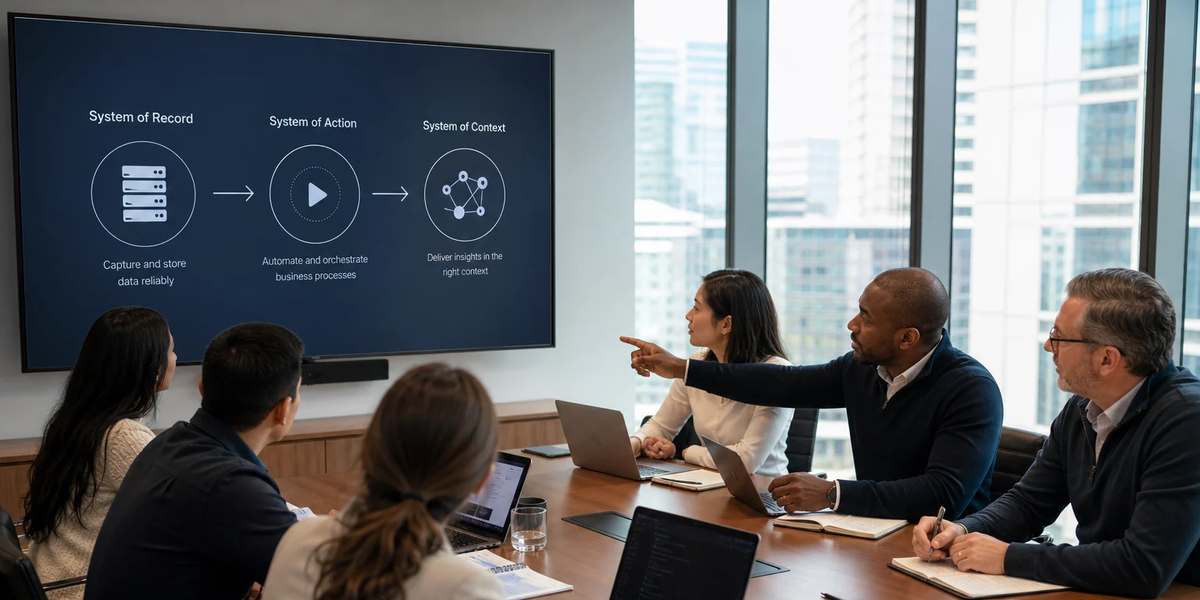
Enterprise systems began by storing the work. Then they began to run it. The era beginning now is about understanding it. The shift to a system of...

Stepping Up Your Service Management: Why Organizations are Moving from Cherwell to ServiceNow For organizations relying on Cherwell Service...